As you may know, I usually provide some personal story related to the film that I’m reviewing in these intros. They mostly fit into one of three categories: 1. I saw the trailer and it looked good. 2. I knew nothing about this before watching. 3. I was excited for this. Koko-di Koko-da fits into all three! (i’m guessing that your jaw is on the floor right now!) I knew nothing about it when I found it on Tubi. The description sounded interesting so I watched the trailer. The trailer hooked me! So I started watching it. Imagine my disappointment when I found that it was in Swedish and Danish with no subtitles offered. What the hell, Tubi?! I turned it off but I was excited to check it out if it ever came to another streaming service that I use or got fixed in Tubi. I came across it again while looking for my 18th movie of 31 for my October 2025 Horrorgeddon GrindathonTM and decided to see if it was fixed. It was! So I watched it. And you can read a synopsis of it followed by a critique of it followed by a TL;DR distillation of my critique right after the next sentence! Let’s get into it, shall we?
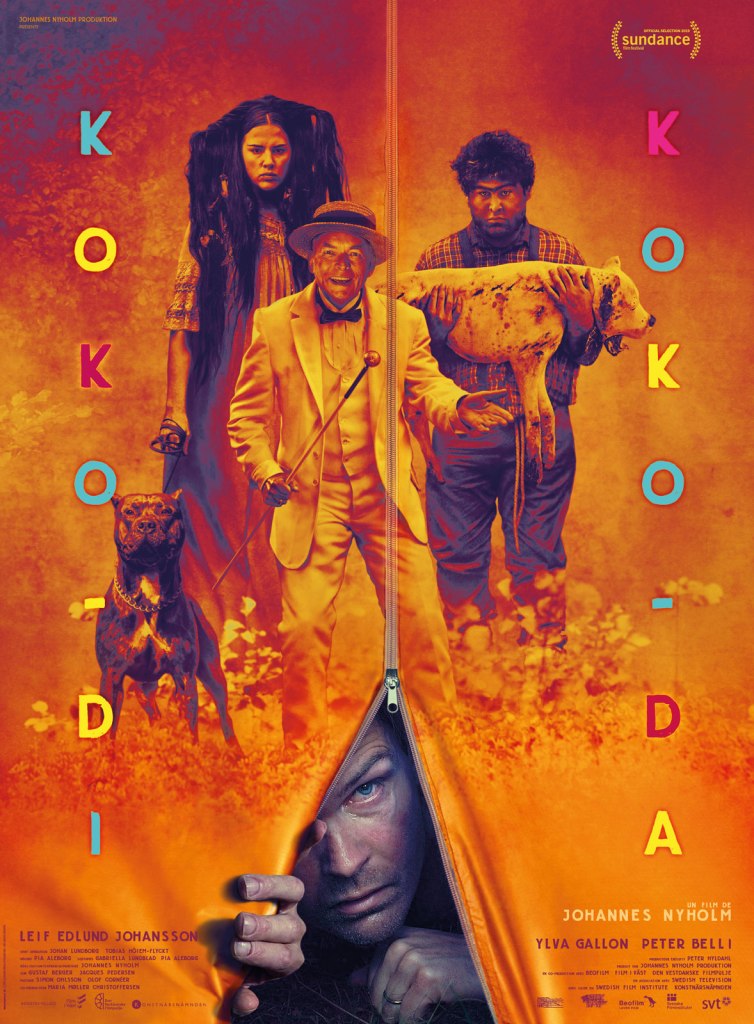
Tobias, Elin, and their daughter, Maja, are having a grand ol’ time on holiday in Denmark. It’s Maja’s 8th birthday so they get her an antique music box that features cartoon renderings of a dapper carnival barker, and beastly brute of a man, and what looks like a witch along with their two dogs. Things take a turn when they eat pizza (Scandinavian pizza?) with mussels on it and mom has a severe allergic reaction. She is taken to a hospital, treated, and kept overnight for observation. Tobias and Maja stay with her. She wakes feeling peachy the next morning, but the parents find that Maja has died in the night from the same shellfish allergy. Cut to: three years later and the couple is traveling to the countryside for a camping break. They are frosty with one another and the turmoil is implied to be a constant in their relationship. At the campsite they are set upon and murdered by real-life versions of the trio from the music box! But that’s not a spoiler, because they wake up right back in the tent for it to happen all over again. Now they must figure out how to survive and escape this bizarre time loop.
Using nightmare logic in films is hit-or-miss. Films that employ the device are misses more often than not. When it’s done well, it can really serve to further immerse viewers in the story. This worked well for movies like Videodrome, Mulholland Drive, and Frontier(s). But for every great use of nightmare logic, we get a bunch of duds that fail to bring viewers into the nightmare fold. When that happens, we are left to wonder what the hell the characters are thinking and chalk it up to bad writing. (i won’t call out specific examples now, but i’ll tease you with this: i will be reviewing Haunt (2019) soon) Koko-di Koko-da is exemplary in its use of this device. The audience is presented with an objectively improbable scenario that we accept and take in stride. Tobias and Elin’s repeating trials and the trio (plus one dead dog and one live one) terrorizing them is nonsensical. Who are these people? Why is one carrying a dead dog? Why is the old dude always smiling? What’s up with that lady’s hair? And why the hell do these people keep behaving so stupidly when their lives are on the line!? We often have questions about the udder randomness of dreamt situations once we wake from our nightmares. Why didn’t my house look like my house? Why was my dad there when he’s been dead for over a decade? Etc. The filmmakers do such a masterful job of this that we accept the events without questions until after the credits roll. Just like a nightmare. The story will have viewers on the edges of their seats silently (or loudly) willing the couple to stop fucking up, but never thinking their behavior is ridiculous or unbelievable. The end result is a film that starts with a shocking tragedy, gets quickly to the surreal violence, and then never lets up. Bravo.
The Final Cut: Koko-di Koko-da is a tight nightmare of an ordeal that shocks from the first reel and never lets up. The bizarre trio of killers is terrifyingly inscrutable and worthy of icon status among horror fans.
 No Real Danger